

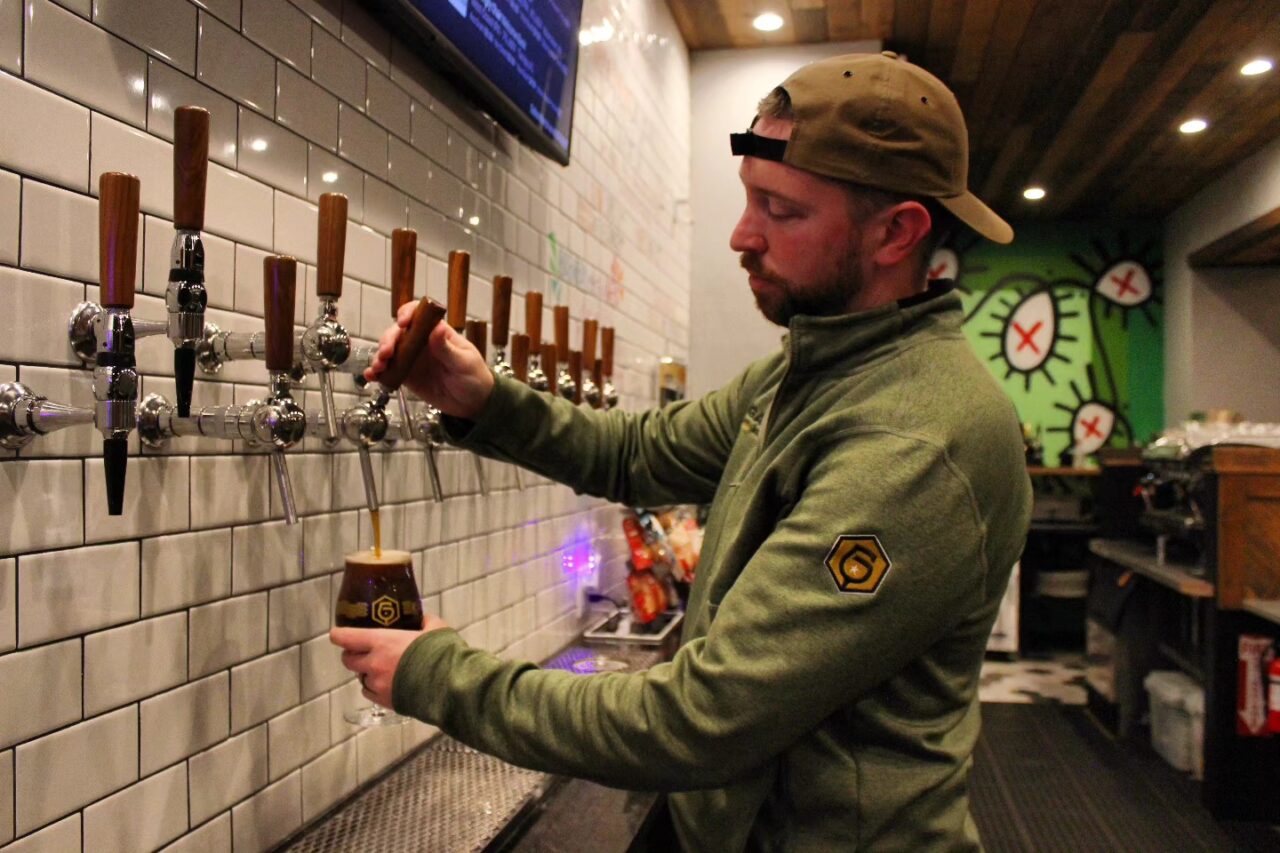
Wisconsin drinks differently from the rest of the country. Bars here pour brandy old-fashioneds without flinching. Friday means fish fry and a Spotted Cow. The state has more breweries per capita than almost anywhere in the U.S. Most of those breweries sell their beer only to other Wisconsinites — by deliberate choice.
This is the Cicerone-led version of why.
The Short Answer: German Immigration, the Tied-House Era, and the New Glarus Doctrine
Three forces built Wisconsin beer culture into what it is today:
- The German immigrant wave of the 1840s–1880s. Milwaukee became the country’s lager capital because the workforce and the brewing tradition arrived together. Pabst, Schlitz, Blatz, and Miller all rose from this period. Madison’s German neighborhoods built their own breweries on the same template at smaller scale.
- The neighborhood tavern was the social infrastructure. Bars weren’t the third place — they were the first place. Pre-Prohibition Wisconsin had bars on most residential corners. Many of those buildings are still bars. The density compounded.
- The New Glarus doctrine, made explicit in the craft era. When New Glarus Brewing decided in the 1990s to sell only in Wisconsin, they made the state’s beer identity into a value system. A beer you can’t take home is a beer you have to come back for.
Everything else — the supper-club brandy, the Friday fish fry pairings, the tailgate culture, the modern craft revival — runs on top of those three foundations.
Why Wisconsin Is a Lager State (and Always Has Been)
The German brewers who arrived in Wisconsin brought lager yeast. Lager fermentation needs cold cellars. Wisconsin has cold cellars (real ones — the old breweries used the limestone caves under Milwaukee and along the Wisconsin River). The geography and the technique matched.
Even after refrigeration made lager possible anywhere, Wisconsin kept brewing it. The state’s drinking water — alkaline, mineral-balanced — flatters German-style lagers in a way that’s harder to fight than to lean into. Modern Madison breweries still get this. Working Draft puts serious effort into clean pilsners. Hinterland in Green Bay has built its reputation on lager craft, and Madison’s Working Draft puts serious effort into clean pilsners year-round.
The market followed. Most Wisconsin bars carry more lager than the national average. Most Wisconsinites drink lager when they don’t specify. That’s an inheritance, not a trend.
The Spotted Cow Phenomenon (and Why It’s About More Than the Beer)
Spotted Cow is a farmhouse ale brewed by New Glarus Brewing Company in New Glarus, Wisconsin — about thirty minutes south of Madison. It’s the state’s best-known beer. It’s also sold only in Wisconsin, by deliberate choice.
The decision is older than the current craft beer culture wars. Co-founder Deb Carey decided early that distribution outside Wisconsin would dilute the brewery’s identity and require trade-offs they weren’t willing to make — production scale changes, recipe consistency requirements, distributor relationships. Better to stay regional and stay yours.
The cultural side effect: anyone who’s tried Spotted Cow and lives outside Wisconsin has to come back to get it. That demand built a tourism funnel for the entire state’s craft beer scene. People plan trips around Spotted Cow and end up discovering Madison breweries on the same drive.
Brewed to the German Reinheitsgebot purity law (malted barley, malted wheat, hops, yeast, water — nothing else), Spotted Cow is a good beer on its own terms. The Wisconsin-only policy is what made it iconic.
The Friday Fish Fry, the Bloody Mary, and the Brandy Old-Fashioned
Three traditions that look like quirks from outside Wisconsin and like cultural infrastructure from inside it:
The Friday fish fry. Born from Catholic abstinence-from-meat traditions in the heavily-Catholic immigrant communities. Beer-battered cod or perch, hash browns, rye bread, slaw, tartar sauce. The beer pairing is almost always a Wisconsin lager — sometimes a pilsner, occasionally a wheat. The fish fry is a weekly ritual, not a special-occasion meal.
The Bloody Mary as breakfast institution. Wisconsin Sunday morning Bloody Marys are aggressive — pickle, cheese, sausage, sometimes shrimp. They’re served with a small beer (often a 4 oz Spotted Cow or a Miller High Life pony) on the side as a chaser. That chaser-beer is called a “snit.” If you order a Bloody Mary and don’t want a snit, say so.
The brandy old-fashioned. Wisconsin is one of the few states where the default Old Fashioned is brandy, not whiskey. The why is mostly historical luck — Korbel’s California brandy was promoted heavily in Wisconsin in the post-Prohibition years, and the state never went back. The supper-club brandy old-fashioned (with muddled fruit, soda or 7-Up, and a cherry garnish) is the Wisconsin standard. We don’t pour it at Garth’s — we’re a beer-only bar — but it’s the cocktail you’ll be offered at most other Wisconsin establishments. (We have poured old-fashioned-inspired barrel-aged beers before!)
The Modern Craft Revival in Wisconsin
The same German-immigrant brewing tradition that built the macro lagers of Milwaukee also built the craft revival of the last two decades. The state has more than 200 active craft breweries. The Madison metro alone has more than 20.
What’s distinct about Wisconsin’s craft scene vs. the coastal craft scenes:
- Lager respect. Wisconsin craft brewers take pilsners and helles and Vienna lagers seriously in a way that took longer to happen in other states.
- Hometown loyalty. Wisconsin craft drinkers will pick a Wisconsin beer over a national craft beer of equivalent quality, more often than not. This isn’t parochialism — it’s a learned habit reinforced by New Glarus’s Wisconsin-only model.
- Less IPA dominance. Hazy IPA is everywhere here too, but Wisconsin craft taprooms generally maintain more stylistic breadth — German lagers, Belgian-inspired beers, brown ales, English-leaning bitters — than the IPA-or-bust coastal pattern.
- Bar density that supports it. Wisconsin has the highest concentration of bars per capita in the U.S. That gives craft brewers more accounts to sell into.
How to Drink Wisconsin-Style as a Visitor
If you came from elsewhere and want to experience Wisconsin beer culture without faking it, four moves:
- Order a Wisconsin beer first. When you sit down at any bar in Madison, the question to ask is: “what’s on tap from a Madison brewery?” If they don’t have a Madison-made answer, ask “what Wisconsin beer do you have?” Lead with the local hierarchy and the bar will treat you like a local.
- Eat a Friday fish fry. Most bars and supper clubs run one. The Old Fashioned on the Capitol Square does an excellent version. Pair with a Wisconsin lager.
- Bring a cooler. Any beer trip to Wisconsin includes take-home beer. Spotted Cow at minimum. New Glarus Belgian Red if you can find it. Anything from a Madison-area brewery you couldn’t find at home.
- Talk to the beertender. Wisconsin craft bar culture is conversational, not transactional. The person pouring your beer probably knows the brewer of whatever you’re drinking. Asking gets you a better second beer.
FAQ
Why is Wisconsin so into beer specifically?
German-immigrant brewing tradition arrived with the workforce that built the state in the 1840s–1880s, settled into the cold cellars and limestone water profile that flatters lager fermentation, and reinforced itself through neighborhood bar density that’s never really declined. The cultural infrastructure was built early and well.
Is craft beer in Wisconsin different from craft beer in California or Vermont?
Yes — Wisconsin craft maintains more stylistic breadth (lagers, German styles, brown ales, English-leaning beers) than the IPA-dominant coastal craft scenes. Hometown loyalty is also stronger, partly because of the New Glarus Wisconsin-only model and partly because the bar density makes Wisconsin breweries economically viable as regional businesses.
What’s the best Wisconsin beer for someone who’s never had one?
If you want the famous answer, New Glarus Spotted Cow. If you want the “something different from what I’d get at home” answer, ask a beertender at any Cicerone-led bar for a Wisconsin pilsner or helles — those are styles Wisconsin craft brewers do exceptionally well and don’t get enough national credit for.
Can I buy Spotted Cow online?
No. New Glarus distributes only in Wisconsin. If you live elsewhere, you have to come to Wisconsin and bring a cooler. That’s the design.
Where do I learn more about Wisconsin’s beer history?
The Milwaukee County Historical Society has standing exhibits on the German-immigrant brewing era. The Mining and Brewing Museums in southwestern Wisconsin cover the smaller-town brewing traditions. For Madison-specific beer history, the Wisconsin Historical Society’s archives in Madison are a good place to start.